Every year, architects and students around the world submit proposals to international architecture competitions, hoping to see their ideas recognized. The brief might ask for a museum, a housing scheme, a public square, or a pavilion, but the challenge is always similar. A jury reviews many entries, often in limited time, and must quickly grasp what each team is proposing. Strong concepts matter, yet they must be communicated clearly. That is why visual storytelling has become central to competition success, and why many teams work with a 3D exterior rendering service to produce images that capture attention. This article explores how to tell a story through visuals and what makes an entry stand out.
How Juries Look at Entries
Competition juries often review dozens or even hundreds of proposals. They tend to scan boards first, looking for a clear idea, a strong image, and evidence that the design responds to the brief.
If the concept is hard to understand at a glance, a good idea can be overlooked. The first impression frequently comes from the main image.
This does not mean style over substance. It means that substance must be visible.
Clarity is not the same as simplicity. A sophisticated project can still be explained clearly if the main idea is prioritized and supporting detail is organized into a logical order that a tired juror can follow.
Competitions also reward originality of thinking, not just polish. A visual style that suits the idea, rather than copying fashionable trends, helps the entry feel genuine and confident.
Building a Visual Narrative
A strong entry tells a story from problem to solution. Start with context, show the concept in simple diagrams, then present the building in a hero image that conveys atmosphere and purpose.
Supporting images can show key moments, such as an entrance, public space, or view from a neighboring street. Each should add something new rather than repeating the same angle.
Consistency of style, color, and typography helps the whole board feel unified and professional.
Try testing your board on someone outside the team. If they can explain your concept after thirty seconds, the story is working. If not, simplify the hero image or reduce the text before you finalize.
The Role of Rendering in International Architecture Competitions
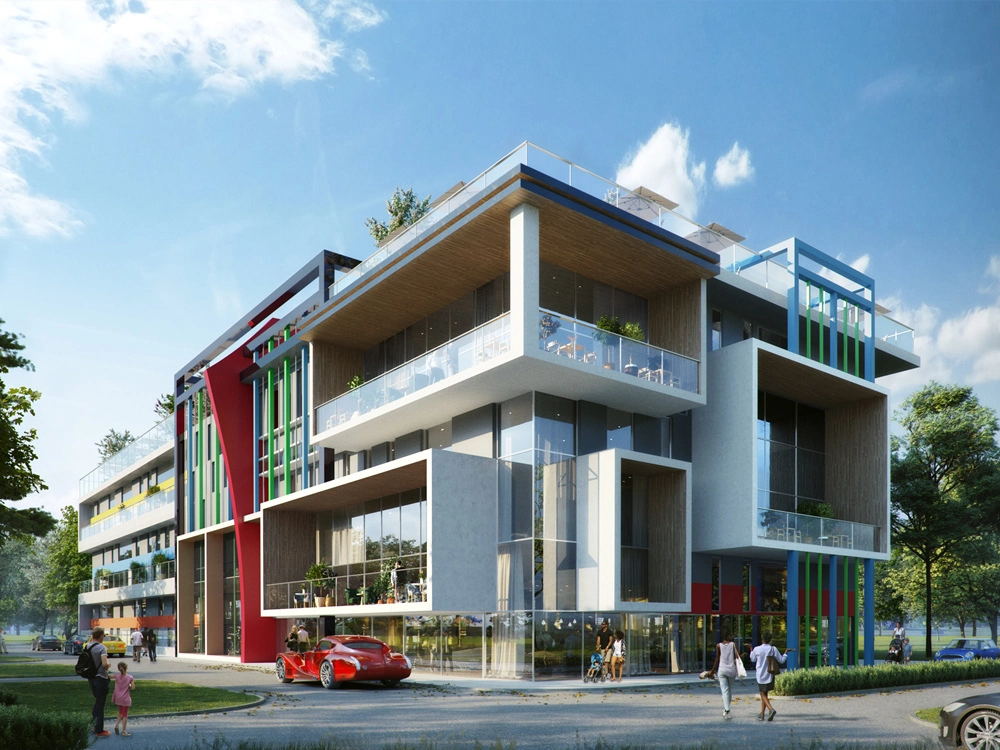
Renderings translate abstract ideas into something people can feel. Light, materials, people, and landscape give scale and emotion to a proposal.
Many teams work with specialists to meet high standards under tight deadlines. Aimir CG promotes its 3D exterior rendering service as combining precision with striking visuals, and its industry news and trends pages offer useful context on international architecture competitions and how visual expectations are changing.
Check competition rules before commissioning images. Some competitions require anonymity or limit how entries may be presented.
Remember that images should be honest. Dramatic skies and heroic angles are fine, but they should not hide the design’s real scale or context, since juries tend to notice when an image tries too hard.
Practical Tips
Plan your board layout early so renderings are made in the right proportions. Decide on the hero image and its mood before production begins. Leave time for feedback and revisions, because the last days before submission are rarely calm.
Looking ahead, expect juries to see more animation and digital formats, but a clear concept and a memorable image will remain central.
Study past winning entries, where available, to understand how teams balance diagrams, plans, and renderings. Learn from the structure without copying the style.
Keep a short statement of the concept ready in a single sentence. If you can express the idea simply, you can place it on the board simply, and the images can then reinforce it.
Conclusion
Success in international architecture competitions depends on clear ideas and compelling communication. Treat visuals as part of the design, work with a capable 3D exterior rendering service when needed, and let your story be understood within seconds.