
So, you’ve got your key, you slide it in, you turn it… and nothing happens. Maybe the dashboard lights flicker like they’re trying to tell you something, or maybe there’s a weird clicking noise, but the engine just refuses to turn over. If you’ve stood there jiggling the key like that’s somehow going to fix it (we’ve all done it), you’re dealing with something a lot more common than you’d think.
Let’s talk about what’s happening behind the scenes, why your car is being so stubborn, and who you should be calling instead of standing in a parking lot getting more frustrated by the minute.
What’s an Immobilizer Key Programmer?
Cars got a lot smarter over the years, which is great until your car decides to be smart at the worst possible moment. Somewhere tucked inside your vehicle is a tiny chip that talks to your key every single time you try to start the engine. It’s basically your car double-checking, “hey, is this really you?” before letting things fire up. Genuinely useful for keeping thieves out, but it also means that if that little conversation between key and car breaks down, you’re stuck even holding the correct key in your hand.
This is exactly why an immobilizer key programmer exists. It’s the specialized tool that lets a technician reintroduce your key to your car’s computer, kind of like resetting a broken friendship so they trust each other again. And no, this isn’t something you can fix with a YouTube video and a screwdriver from your junk drawer. It genuinely takes the right equipment and someone who knows their way around it.
Signs That Point to an Immobilizer Key Programmer Being Your Fix
Wondering if this is your issue? A few clues to look for: a security light on your dashboard blinking away like it’s having a moment, an engine that cranks but just won’t catch, or a car that feels totally lifeless even though the battery’s fine and your key looks perfectly normal. Sometimes this pops up right after a battery swap, sometimes after a cheap key duplicate was made somewhere, and sometimes it just happens because electronics can be weirdly temperamental.
If you’ve already ruled out the usual suspects like an empty tank or a dead battery, there’s a solid chance your car’s security brain just needs someone to sit it down and have a proper chat with it.
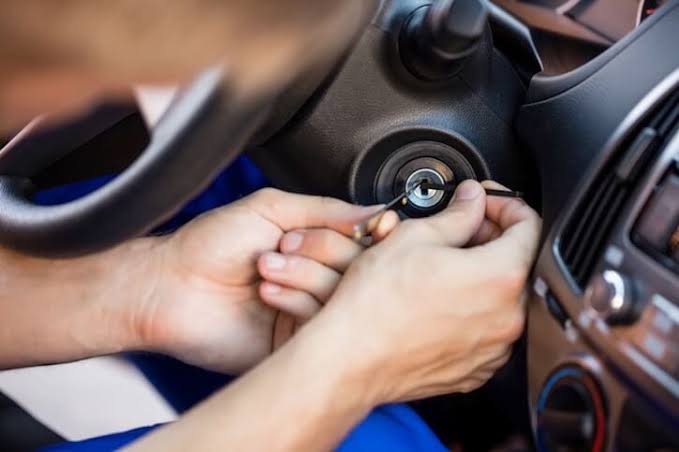
What Programming Immobilizer Systems Actually Looks Like
Okay, here’s the slightly nerdy part, but I promise it’s worth knowing. Programming immobilizer systems is nowhere near as simple as pushing a magic button. A technician typically hooks up diagnostic equipment straight to your car’s computer, confirms you’re the actual owner, and then carefully walks the key and the car through the process of trusting each other again.
Every vehicle handles this a little differently. Some cars are chill about the whole thing, while others, looking at you, certain European models, make technicians earn their pay check. This is honestly one of those areas where experience makes all the difference, since someone who’s done this hundreds of times moves a lot faster and cleaner than someone figuring it out on the fly.
- Most sessions take somewhere between 20 minutes and an hour, though your car’s mood and specific security setup have a lot to say about that.
When You Genuinely Need an Immobilizer Key Programmer, No Way Around It
There are a few situations where this isn’t optional; it’s just the only path forward. Lost your only key? You’ll need it. Picked up a used car and want to make sure the previous owner’s spare keys are useless now? Same story. Had a new key cut somewhere but your car still refuses to start? Yep, still need it.
None of these are problems you can talk yourself out of, since the immobilizer is literally designed to stop unauthorized starts. Annoying in the moment, sure, but it’s kind of doing exactly what it’s supposed to.
Finding Someone Who Actually Knows What They’re Doing
Not every mechanic or locksmith is equipped for this kind of work, so it’s worth asking a couple of questions before you commit. Have they worked on your car’s make and model before? Do they carry up-to-date programming tools? How long do they think it’ll realistically take? Someone who genuinely knows what they’re doing won’t dance around these questions.
Also, just ask about pricing before anything starts. Costs can shift depending on how complicated your car’s system is, and getting a ballpark number upfront saves you from an unpleasant surprise later.
A Few Small Things That Help Down the Road
You can’t dodge every electronic glitch, but a couple of habits help. Try not to let your battery die completely if you can help it, since sudden power loss occasionally throws the immobilizer for a loop. Keep a spare key tucked away somewhere safe, and if you ever need duplicates made, go with someone reputable who’ll program it correctly the first time instead of cutting corners.
Conclusion
Dealing with an immobilizer hiccup is genuinely frustrating, especially when your car just sits there refusing to start for reasons that feel completely mysterious. But with the right person and the right tools, it’s usually a much faster fix than people assume. If you’re around the Kansas City area, Quick Keys has the know-how to get your key and your car talking again without dragging the whole thing out. Sometimes it really just takes the right expert with the right tool, and you’re back on the road before you know it.
FAQs
1. How can I tell if this is really an immobilizer issue?
Look for a flashing security light, an engine that cranks without starting, or a car that seems dead despite a healthy battery and a normal-looking key.
2. Do I need to tow my car in, or can this be fixed on-site?
Plenty of technicians offer mobile service and can handle the whole process right where your car’s parked.
3. How long does programming usually take?
Typically, 20 minutes to an hour, though it really depends on your vehicle’s make, model, and how complex its system is.
4. Will I need to prove I own the car?
Yes, and honestly that’s a good sign. It means the technician actually cares about security instead of handing access to just anyone.
5. Does every car have this kind of system?
Most vehicles from the last couple of decades do, though some older cars still use simpler mechanical keys without it.