
In recent years, the world of peptide research has witnessed remarkable breakthroughs, with synthetic compounds opening doors to advanced metabolic and endocrine studies. One such compound gaining attention is the retatrutide peptide. Known for its multi-receptor activity, retatrutide offers researchers a unique tool to explore complex hormonal signaling and energy regulation mechanisms. Whether you are a laboratory scientist, a research student, or simply curious about peptide advancements, understanding retatrutide’s properties and potential applications can illuminate exciting avenues in biomedical research.
What is Retatrutide Peptide?
The Retatrutide peptide is a synthetic, triple agonist peptide designed to interact with GLP-1, GIP, and glucagon receptors. Unlike traditional single-target compounds, this peptide activates multiple pathways simultaneously, allowing researchers to study integrated metabolic responses in controlled environments.
- Its triple-agonist nature makes it particularly valuable for examining energy balance, glucose regulation, and lipid metabolism.
Laboratories use retatrutide primarily for experimental research rather than therapeutic purposes. Each batch undergoes stringent testing, including LCMS analysis, sterility verification, and heavy metal screening, ensuring researchers receive highly pure and reproducible material.
How Retatrutide Peptide Supports Advanced Research
Multi-Receptor Activation and Its Implications
The standout feature of the retatrutide peptide is its ability to engage three distinct receptors, a property that enables a deeper understanding of metabolic pathways. By simultaneously activating GLP-1, GIP, and glucagon receptors, researchers can observe how these pathways interact under different experimental conditions.
- For instance, studies exploring glucose metabolism can monitor how multi-receptor activation affects insulin secretion and glucose uptake. This offers insights that single-receptor compounds cannot provide.
Beyond metabolism, retatrutide also provides a framework for investigating endocrine crosstalk, offering a platform to study hormone regulation and energy expenditure in a controlled laboratory setting.
Practical Considerations for Laboratory Use
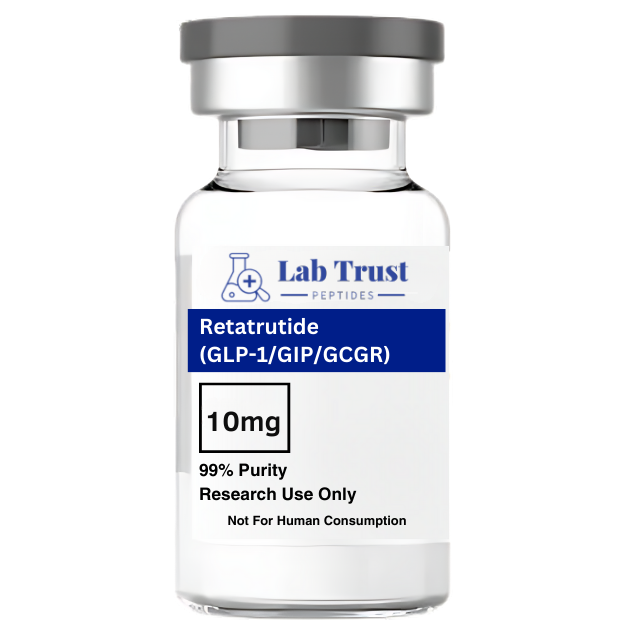
When working with retatrutide peptide, proper handling is crucial. Typically supplied as a lyophilized powder in sterile vials, it must be reconstituted with bacteriostatic water or a compatible laboratory solvent. Researchers are advised to store it at low temperatures, avoiding repeated freeze-thaw cycles to preserve stability and purity.
- Each batch comes with a Certificate of Analysis (COA), providing transparency and ensuring consistency across experiments.
These precautions make retatrutide a reliable tool for experimental designs that demand precision and reproducibility.
Benefits of Using Retatrutide Peptide in Research
- High Purity: With over 99% purity verified through rigorous testing, retatrutide peptide ensures accurate experimental outcomes.
- Triple-Pathway Exploration: Its multi-receptor mechanism allows researchers to explore complex metabolic and hormonal interactions.
- Consistency: Strict quality control and COA documentation support reliable batch-to-batch performance, critical for replicable studies.
The combination of these benefits positions retatrutide as a peptide of choice for advanced metabolic research, especially in laboratories focused on endocrine and energy balance studies.
Conclusion
The retatrutide peptide represents a fascinating advancement in synthetic peptide research. By offering multi-receptor activation and high analytical reliability, it provides researchers with a powerful tool to study complex metabolic and hormonal systems. As laboratories continue to investigate its applications, retatrutide may unlock new understanding in metabolic regulation, energy balance, and integrated endocrine function. For researchers seeking precision, consistency, and the ability to explore multi-pathway interactions, this peptide is a promising resource that bridges innovation with scientific rigor.